BackGemini 4

Gemini 4

Morgan Stanle
2026-08-27 06:13:09

Morgan Stanley Sees Google Trading at a Premium While Meta Stays Deeply Discounted

Morgan Stanley’s Aug. 25 internet valuation update points to a sharp split in how the market is pricing major U.S. internet platforms. Over the past week, the bank’s covered internet names fell 2% on average, in line with the S&P 500 and Nasdaq, but individual performance diverged: Meta dropped about 7%, Amazon fell about 2%, and Google was roughly flat. In the report, Morgan Stanley kept its internet sector rating at “attractive” and laid out why valuations have pulled apart across the group. Google is the outlier. On a forward EV/EBITDA basis, it trades at 15.1x, an 8% premium to its two-year average and a 12% premium to its three-year average. Morgan Stanley tied that premium to a reassessment of Google’s AI position, including higher assumptions for external TPU sales, Gemini model progress, and expanding cloud margins. Meta, by contrast, trades at 8.7x forward EV/EBITDA, a 30% discount to its two-year average and a 28% discount to its three-year average, even as its AI ad tools show monetization progress. Amazon sits between the two at 11.2x, below both its two-year and three-year averages. The bank said any broader valuation recovery will need earnings estimate upgrades rather than a simple move back to historical averages.

130
Morgan Stanley Sees Google Trading at a Premium While Meta Stays Deeply Discounted
Alphabet
2026-08-26 06:33:31

Morgan Stanley lifts Alphabet TPU pricing assumptions, says Google Cloud could deliver half of EBIT by 2028

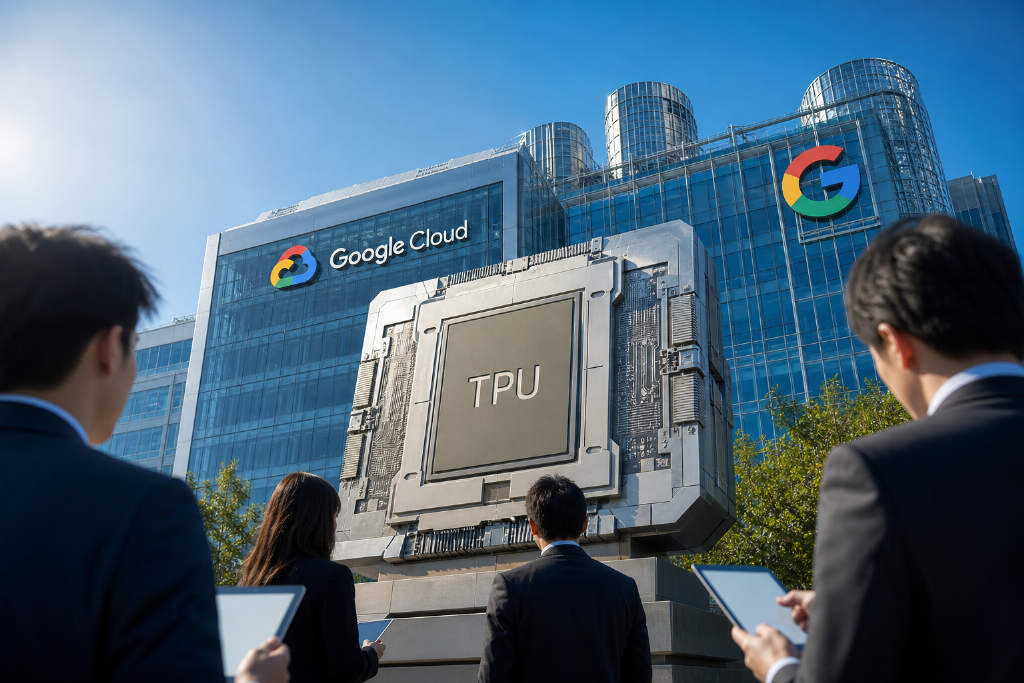
Morgan Stanley said in an Aug. 24 research note that Google Cloud could account for about 50% of Alphabet’s total EBIT by 2028, making the cloud unit a central profit driver for the company. The bank raised its revenue assumption for Google’s external TPU sales to $27 billion per gigawatt from $20 billion, and lifted its gross margin assumption to 30% from 20%. With those revisions, Morgan Stanley now projects TPU-related cloud revenue of $84 billion in 2027 and $108 billion in 2028, up 35% and 37% from its previous forecasts. The note said the change was supported by recent media reports, including Google’s commitment to supply roughly 1 million TPUs to a customer, which the bank estimated at about 1.3GW and around $35 billion in revenue, as well as a custom chip agreement with Marvell. Morgan Stanley maintained its Overweight rating on Alphabet and kept its $400 price target, which it said implied 16% upside from the current share price. The firm also argued that while TPU sales may slightly dilute reported cloud margins, the added revenue is large enough that Google Cloud’s absolute profit should keep rising quickly.

160
Morgan Stanley lifts Alphabet TPU pricing assumptions, says Google Cloud could deliver half of EBIT by 2028
Google
2026-08-13 09:46:31

Leak says Google may launch Gemini 3.7 Flash today with API pricing cut in half

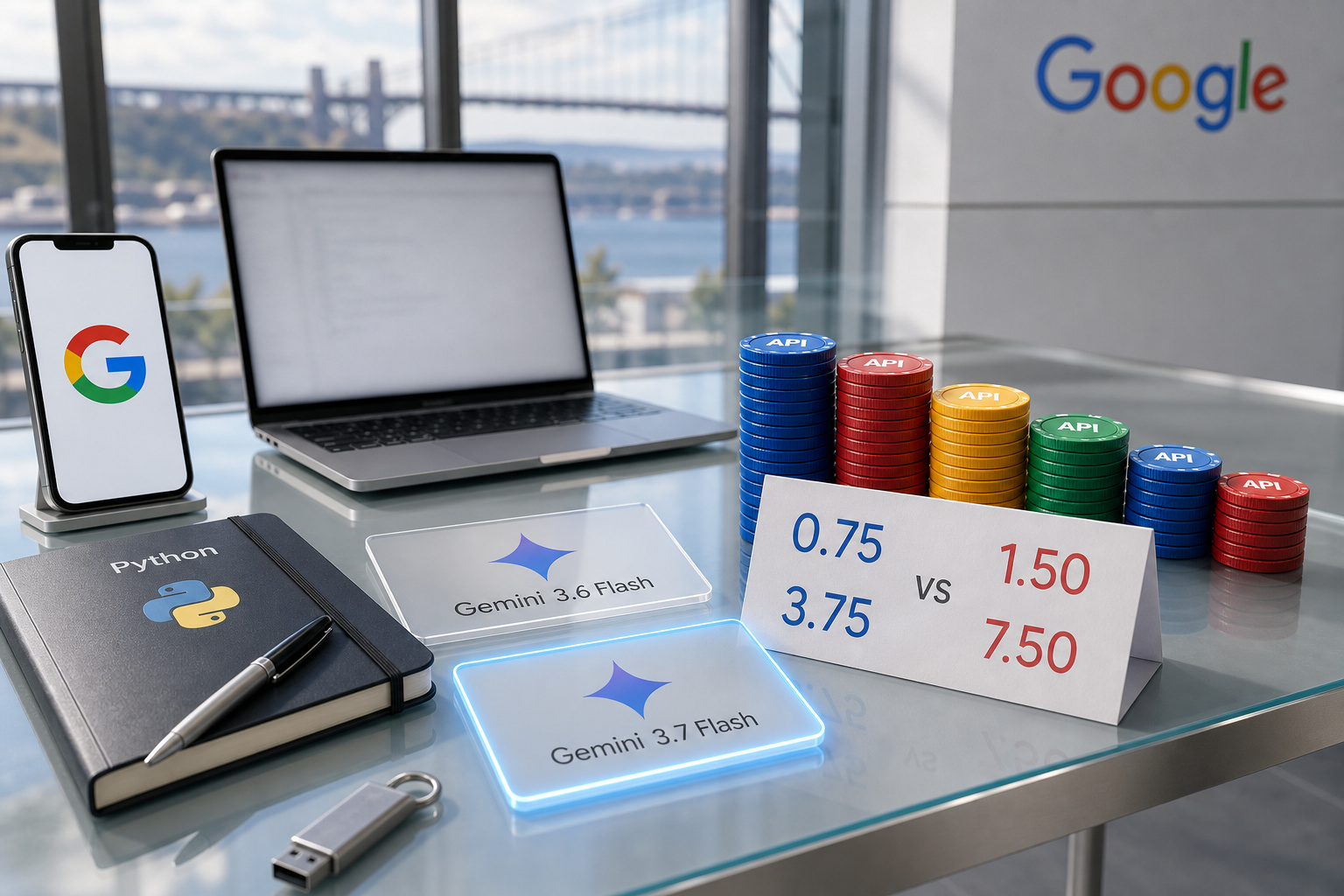
A new report cited by ChainCatcher says Google could roll out Gemini 3.7 Flash as soon as today, with API pricing potentially dropping to $0.75 per million input tokens and $3.75 per million output tokens. That would be a sharp reduction from the current standard pricing for Gemini 3.6 Flash, which stands at $1.50 for input and $7.50 for output per million tokens. If the leaked pricing is accurate, the new model would come in at roughly half the current rate. The report also notes that speculation around Gemini 3.7 Flash has been building for some time. Google’s official Python GenAI SDK briefly included a reference to `gemini-3.7-flash`, before the related pull request was renamed to "internal" and then closed. Separately, SemiAnalysis said last week that Google had internally canceled Gemini 3.5 Pro, previously seen as a flagship model, and shifted the team toward a larger Gemini 4 effort. According to leo, he has heard the same internally.

570
Leak says Google may launch Gemini 3.7 Flash today with API pricing cut in half
Google
2026-08-11 11:40:08

Sergey Brin Rejoins Gemini Strategy as Report Says Google Has Scrapped Gemini 3.5 Pro

Google’s Gemini roadmap has come under fresh scrutiny after a model the company previewed at Google I/O in May still has not arrived by mid-August. Gemini 3.5 Pro was shown on a keynote slide with the message that it was coming the following month, yet Google has only released newer Flash variants, including 3.6 Flash, 3.5 Flash-Lite, and 3.5 Flash Cyber. Google’s public position is that Gemini 3.5 Pro remains in closed testing with limited partners and has no confirmed launch month, while Gemini 4 has already entered pre-training. SemiAnalysis, an independent research firm focused on semiconductors and AI, has taken a sharper view, arguing that Gemini 3.5 Pro has effectively been canceled. The report says the missing flagship model adds to broader concerns around Google’s AI execution, especially as public benchmarks place Gemini 3.6 Flash around eighth or ninth depending on the ranking system, and as rivals continue to push in reasoning, coding, and agent use cases. At the same time, Financial Times reported that Google co-founder Sergey Brin has re-entered high-level Gemini strategy discussions. His renewed involvement comes alongside major leadership changes at Google DeepMind, senior departures, and growing debate over whether Google is allocating enough TPU capacity to its own frontier model work while also supplying infrastructure to Anthropic.

1030
Sergey Brin Rejoins Gemini Strategy as Report Says Google Has Scrapped Gemini 3.5 Pro
Google
2026-08-11 04:33:19

Google’s AI talent exodus wipes $16 billion off Alphabet, but its moat may be intact

Alphabet lost about $16 billion in market value on Wednesday after an unusually concentrated round of leadership and talent changes inside Google’s AI ranks. Jeff Dean and Sanjay Ghemawat, the only two engineers to ever hold Google’s L11 Senior Fellow title over a 27-year span, both resigned the same day. Hours later, Nobel laureate Demis Hassabis said he would step back from day-to-day management of Google’s AI lab, with DeepMind CTO Koray Kavukcuoglu taking over operations tied to Gemini 4. The article argues that the bigger question is not simply who left, but what Google actually lost. Dean, Ghemawat, Oriol Vinyals, and Quoc Le are now tied to Discovery Loop, a public-benefit company focused on automating the experimental loop in machine learning research. Yet Google is not just watching from the outside: it is a founding investor in Discovery Loop and its exclusive cloud provider. The same pattern shows up elsewhere, from Google’s roughly 14% stake in Anthropic to its $2.7 billion Character.AI licensing deal that brought Noam Shazeer back before he left again for OpenAI. Even as Google looks weaker in frontier model rankings, the piece says its distribution, cloud infrastructure, custom chips, and equity stakes still compound underneath the org chart drama.

250
Google’s AI talent exodus wipes $16 billion off Alphabet, but its moat may be intact
Google
2026-08-08 10:00:01

SemiAnalysis says Gemini is slipping in the AI race as Google turns TPU capacity into a bigger business

SemiAnalysis argued in an Aug. 7 report that Google’s Gemini franchise may be losing ground in the frontier AI model race, even as Alphabet’s broader AI business keeps expanding through Google Cloud Platform. The report tied that view to major leadership changes at DeepMind, the departure of senior researchers including Jeff Dean and Oriol Vinyals, and weaker momentum in Gemini’s product roadmap after Gemini 3 Pro. At the same time, SemiAnalysis said Google may be making a different bet: selling TPU systems and AI compute to outside customers, including Anthropic, one of Gemini’s clearest rivals. The firm estimated that more than 20% of TPU shipments from the third quarter of 2026 through the fourth quarter of 2027 could go directly to Anthropic, on top of hundreds of thousands of leased TPUs and more capacity promised to Anthropic and Meta. The report said this shift could materially reshape Google Cloud’s growth profile. Alphabet has already confirmed that Google Cloud began directly delivering TPU systems into customer data centers in the second quarter and started recognizing that revenue. SemiAnalysis estimated TPU system sales contributed about $1.2 billion in the quarter and projected GCP growth could top 100% in 2027, with Google’s external AI business approaching $200 billion by the end of that year.

1860
SemiAnalysis says Gemini is slipping in the AI race as Google turns TPU capacity into a bigger business
Alphabet
2026-07-23 02:41:04

Alphabet’s Q2 cloud beat lifts AI demand outlook, but negative free cash flow weighs on shares

Alphabet’s 2026 second-quarter results delivered a clear split narrative for investors. Revenue beat consensus, Google Cloud growth came in well ahead of even optimistic buy-side expectations, and the company’s advertising business also topped forecasts in aggregate. At the same time, management raised its 2026 capital expenditure guidance to $195 billion-$205 billion from $180 billion-$190 billion and said spending would continue to rise meaningfully in 2027, reinforcing demand visibility for AI chips, servers, storage and data center infrastructure. The market reaction focused elsewhere. Free cash flow swung from $10.12 billion in the prior quarter to negative $5.86 billion as capex climbed to $44.92 billion, up 100.5% year over year and 25.9% quarter over quarter. Core earnings were also softer than the headline suggested: while GAAP EPS reached $9.11, boosted by $77.1 billion in unrealized gains from equity investments, EPS excluding other gains was about $2.85, below the $2.95 consensus estimate. Management also acknowledged Gemini still needs improvement in coding and agentic programming, without offering a firm timetable or measurable milestones. Alphabet shares fell about 3% in after-hours trading.

980
Alphabet’s Q2 cloud beat lifts AI demand outlook, but negative free cash flow weighs on shares
Polymarket
2026-07-23 01:03:25

Polymarket to challenge French block as U.S. CLARITY bill enters final push

Polymarket said it will challenge France’s decision to block access to its prediction market platform, according to Reuters, setting up a legal fight with the country’s gambling regulator. The French National Gambling Authority, or ANJ, blocked the site last week, arguing that the platform could expose users to significant gambling losses and that its markets were vulnerable to manipulation. Polymarket said it was disappointed and would seek relief through French legal channels. The development came alongside a broader set of crypto and tech updates. U.S. Treasury Secretary Scott Bessent said lawmakers are in the “final sprint” on the CLARITY bill and urged Congress to pass it before recess, according to Cointelegraph. Separately, The Block reported that Movement Labs, the former core developer behind the Movement blockchain, filed for Chapter 11 bankruptcy protection in Delaware on July 15, listing liabilities of as much as $10 million and naming co-founder Rushikesh “Rushi” Manche as its largest unsecured creditor with claims exceeding $1.6 million. Other developments included Google’s release of new Gemini Flash models, a response from Xiaohongshu denying IPO rumors, layoffs in Amazon’s AGI unit, fresh on-chain tracking of funds stolen from Summer Fi, an OpenAI security incident disclosed during internal model testing, and Kraken parent Payward’s plan to expand xStocks into additional overseas equity markets.

1060
Polymarket to challenge French block as U.S. CLARITY bill enters final push